Phoebe's Fatal Flaw: Wuthering Waves' Design Crisis Must End Now
Phoebe in Wuthering Waves is shackled to the Spectro Frazzle debuff, turning her kit into a one-key piano that only Spectro Rover can play.
When I pulled Phoebe, the gleaming 5-star Resonator in Wuthering Waves Version 2.1, I expected a graceful dance of light and judgment. Instead, I got a beautiful ship without an ocean. Her entire combat identity is lashed to a single debuff called Spectro Frazzle, and without it, she is like a radio tuned exclusively to a station that only one other character can broadcast. That character is Spectro Rover—and if you don't bring them along, Phoebe might as well be swinging a flashlight in a thunderstorm.
This is not an exaggeration. Phoebe’s kit doesn't just reward Spectro Frazzle; it demands it. Her multipliers, her stance mechanics, her very reason for being—all collapse unless the enemy is already afflicted. I watched my damage output plummet to near zero when I dared to experiment without Spectro Rover. It felt less like playing a character and more like playing a conditional command prompt: if debuff = true, proceed; else, despair.
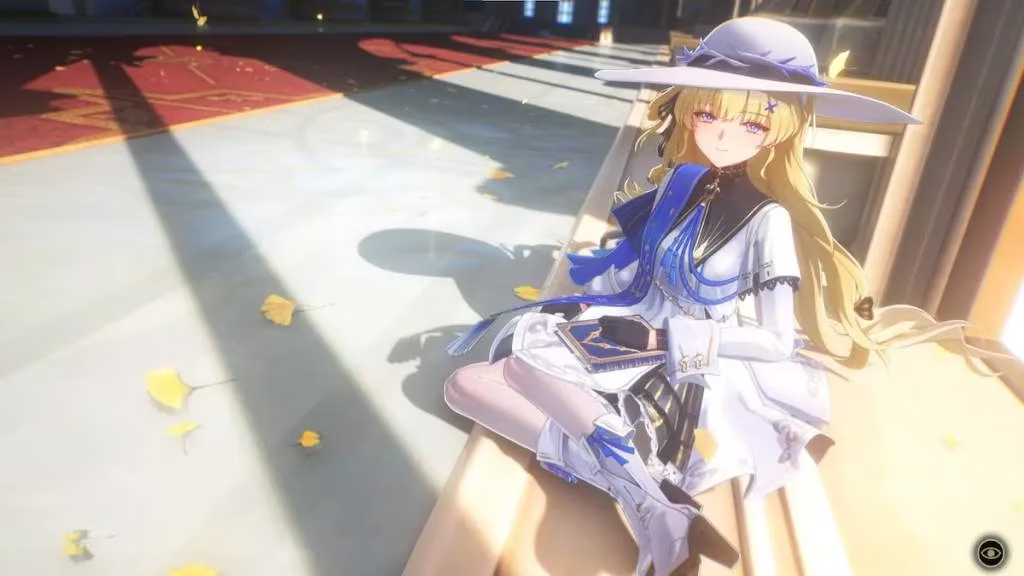
The core issue here isn't just a balance oversight—it's a philosophy slip. Most Resonators in Wuthering Waves arrive with a flexible instrument in hand. They can solo content albeit imperfectly, then soar when paired with synergistic teammates. Phoebe, however, is a one-key piano. Without Spectro Frazzle, her attacks are as hollow as a bell with no clapper. This forced dependency shrinks team-building into a narrow corridor, and if left uncorrected, it will turn future character releases into a parade of locked doors where each key is sold separately.
Seeing this design choice, I can't help but recall an old fable: a king who demanded his subjects always wear a specific ribbon before they could speak to him. Technically, everyone had access to the ribbon, but the rule itself was arbitrary and stifling. Spectro Rover is that ribbon—freely given to all players, yes—but the very requirement signals a dangerous creative direction. It whispers of a monetization pattern where problems are deliberately manufactured, then solved by the next limited banner.
Imagine if future Resonators arrive with equally rigid manacles—a DPS that requires a singular 4-star to apply "Memory Stain," a support that only works when "Harmonic Echo" is active from one premium unit. The game would morph from a vibrant orchestra into a collection of soloists who refuse to play unless their personal accompanist is present.
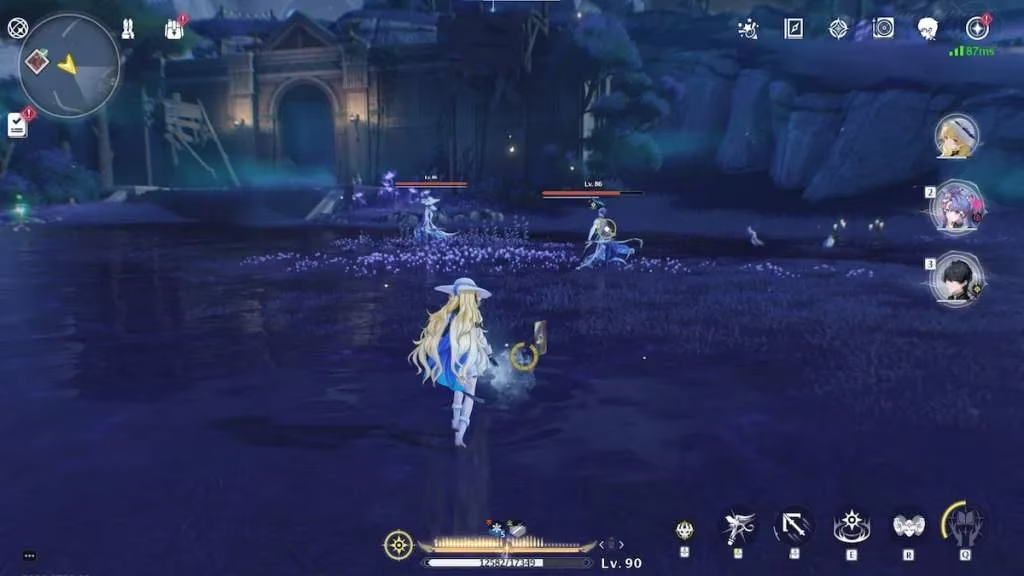
There are two clear paths to healing this design before it becomes a chronic illness. First, Kuro Games could reduce the cooldown on Phoebe’s stance-switching between Absolution and Confession. Currently locked behind a grueling 24-second barrier, it prevents her from applying her own Spectro Frazzle with any rhythm. Lower that cooldown, and she becomes a self-sufficient duelist who can still reward cooperative play but is no longer a hostage to it. The second fix is even simpler: shrink the damage abyss between frazzled and non-frazzled targets. She should still gain a noticeable bonus against debuffed enemies—that's her thematic flavor—but not to the point where her damage without it resembles tossing pebbles at a fortress.
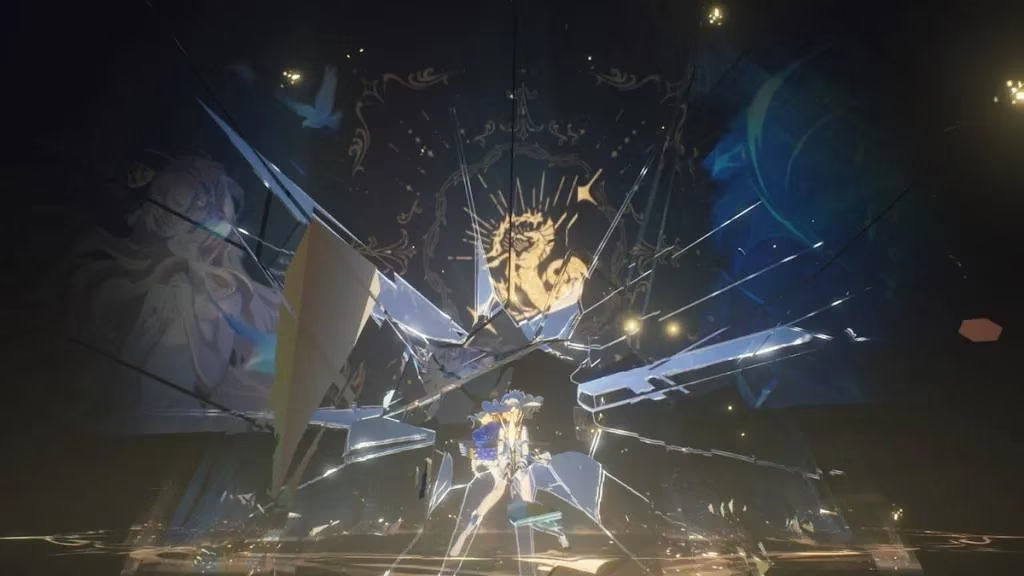
I refuse to believe this was merely an innocent misstep. Live-service games often test the waters with a pebble, and if the players don't ripple, that pebble becomes a boulder next patch. By making Phoebe's viability hinge on a single debuff, the developers have essentially erected a tollbooth on fun. Tomorrow, the toll might be a 5-star Spectro Frazzle applier you must pull, turning today's "free" requirement into yesterday's sunk cost.
Fortunately, Kuro Games has built a reputation for listening. Their survey feedback loops have rebalanced Echoes, adjusted droprates, and smoothed out combat pacing in the past. That's why I'm penning this in 2026, looking back at Phoebe's debut as a critical fork in the road. We are now seeing the consequences of either speaking up or staying silent. The players who filled out those Version 2.1 surveys, who demanded flexibility, who decried the Spectro Frazzle dependency with thunderous clarity—they shaped what followed. Subsequent Resonators like Yinhe and Zephyr arrived with stances that could be woven solo or amped by allies, never shackled to a single mechanic. The game's character design returned to the philosophy of "strong alone, stronger together" that made its launch roster so beloved.
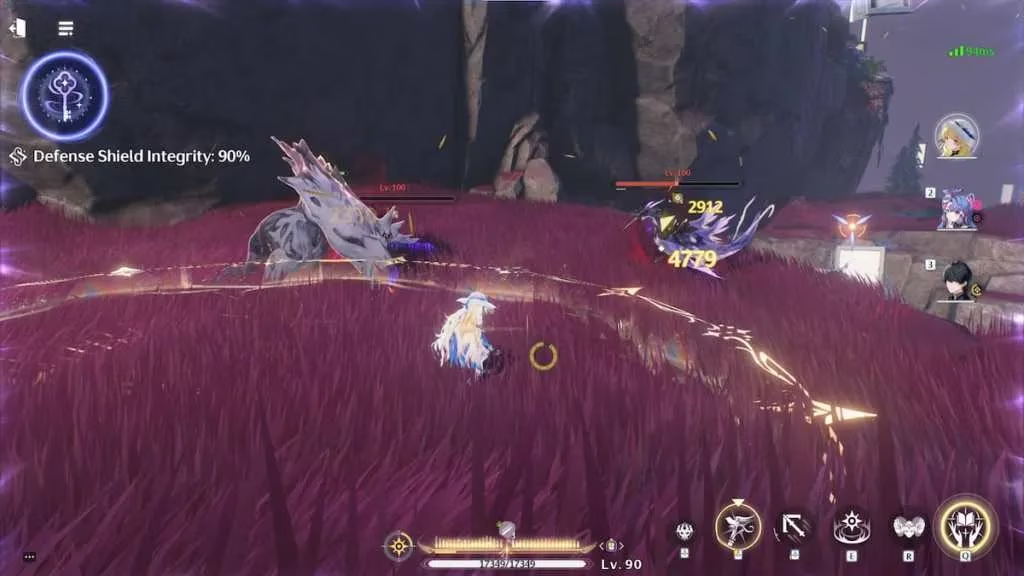
But we must remember: that outcome wasn't inevitable. It was wrestled from the jaws of a potential design grind by a vocal community. Phoebe still stands as a cautionary tale, a monument to what happens when a character is built not around a playstyle, but around a restriction. Her visual design remains stunning, her animations poetic—yet her initial kit was a love letter addressed only to one recipient.
If you're reading this and sensing a similar pattern in the latest beta or banner, don't wait. Wuthering Waves thrives on its mix-and-match combat, where creativity should be the only leash. Every time we accept a "must-pair" character, we trade a bit of that freedom for a predetermined script. Speak in surveys, in community threads, in constructive feedback. Demand that characters are designed like a well-built bridge, not a puzzle piece that only fits one jagged edge.
Phoebe was a beautiful mistake that taught us an ugly lesson. Let's ensure it stays a lone chapter, not the whole book.
Comments (0)